US Ends Automatic EAD Extension A Human Centered Guide to Understanding the DHS EAD Rule 2025
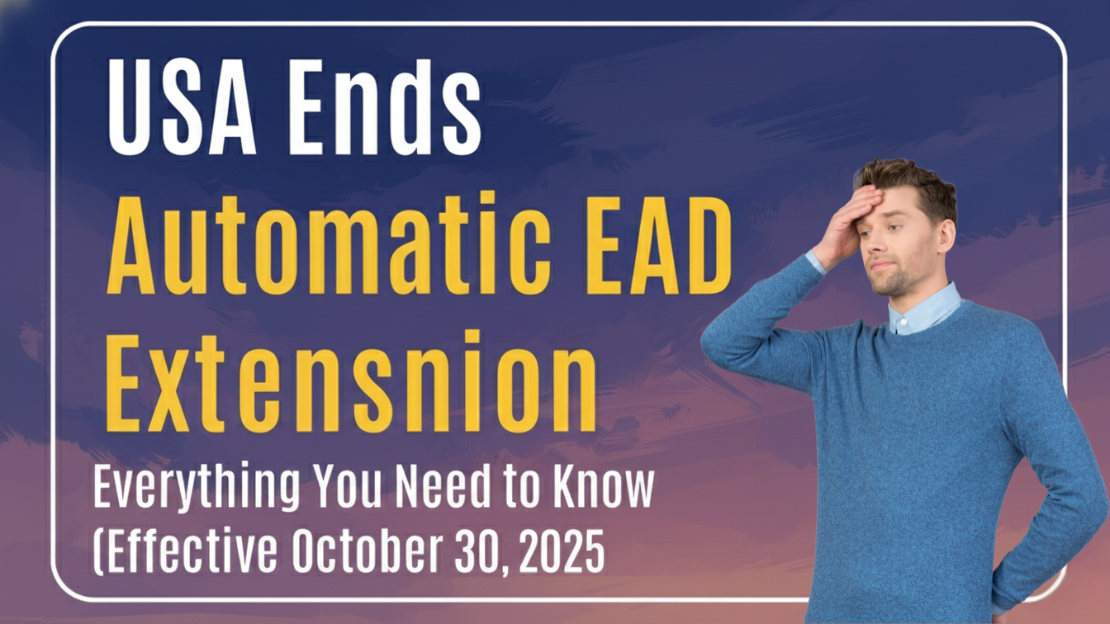
When the announcement came out that the US Ends Automatic EAD Extension, many immigrant families felt something shift inside them. It was not a small administrative update. It was not a change that could be ignored. Instead, it felt like a wave of uncertainty washing over thousands of workers who had built their lives in the United States brick by brick, paycheck by paycheck, and renewal by renewal.For many people, an EAD is more than a card. It is an identity. It is the symbol of a dream that is still alive. It is the permission that allows them to show up at work, support their families, contribute to their communities, and move forward with hope. When the automatic 180 day extension existed, it acted like a safety net stretched under the feet of every immigrant worker. Now, with the DHS EAD Rule 2025, that net is gone.Suddenly, people who had carefully managed everything from rent to school fees found themselves worrying about something they have little control over: processing times. This blog takes a close, human look at how this rule affects lives, emotions, families, careers, and the fragile balance many immigrants work tirelessly to maintain.
The Emotional Shock When the US Ends Automatic EAD Extension News Spread
Many people remember exactly where they were when they first heard about the rule. Some were at work during their lunch break. Some were preparing dinner for their families. Others were checking their renewal status online for the tenth time that week. No matter where they were, the moment felt heavy.Until now, the automatic extension had acted like a protective shield. Even if processing took six months or longer, there was comfort in knowing that work could continue. Bills could be paid. Children could stay insured. Life would remain stable.So when people read that the US Ends Automatic EAD Extension, a wave of fear overtook them. Some felt their heart drop. Some felt angry. Some felt exhausted because the immigration journey had already stretched them thin.Thoughts rushed through their minds:What if my approval is delayed?
What if I lose my job even though I did everything right?
What will my employer say?
How will I take care of my family?
Why does everything feel so unstable?These are not exaggerated fears. They are the real concerns of real people who contribute to the economy, support their families, and follow every rule placed in front of them.
Understanding the DHS EAD Rule 2025 in Simple Human Language
The DHS EAD Rule 2025 made one major change that affects thousands of lives. Previously, anyone who applied for their EAD renewal on time automatically received a 180 day extension while the government continued reviewing their case.That extension is now gone.Under the new rule:Your renewal must be fully approved before your current EAD expires.
If approval does not arrive in time, you must stop working.
There is no grace period and no temporary protection during delays.This means that even the slightest delay in processing can interrupt someone's income, career, and stability.Immigrants already manage their lives around careful planning. But now, even planning months in advance may not remove all uncertainty.
Why This Rule Feels So Heavy for Immigrant Families
Immigrants often live in two worlds at once. One world is full of hopes and opportunities. The other is full of constant reminders to meet deadlines, check updates, keep records organized, and prepare for the unexpected. The removal of the automatic extension adds a level of emotional pressure that is difficult to explain to those who have never walked this path.Families fear losing not just income, but security.
Parents fear losing health insurance for their children.
Students fear losing their chance to build a future.
Workers fear losing the job they worked so hard to earn.
Spouses fear watching their partner struggle mentally and emotionally.This rule is not just paperwork. It is a shift that touches every corner of life.
Groups Most Affected by the End of the Automatic EAD Extension
While the rule affects many categories, some groups face stronger impacts because their processing times have historically been long.H4 spouses often deal with lengthy and unpredictable approval times.
L2 spouses rely heavily on their work authorization to support family finances.
Adjustment of status applicants already navigate long multi year processes.
TPS holders face complexities tied to humanitarian circumstances.
Asylum applicants wait through extremely slow timelines.
OPT and STEM OPT students need smooth transitions to begin their careers.Across all categories, one message is clear. The vulnerability is real.
Why the DHS EAD Rule 2025 Was Introduced According to Officials
Officials stated that the goal of the DHS EAD Rule 2025 is to create more consistency and reduce the risk of misuse in the system. They believe that by removing the automatic extension, the system becomes more controlled and structured.However, immigrant communities and advocates feel that the timing clashes with the reality of processing delays. They argue that removing a safety net without improving the speed of approvals places families in difficult and unnecessary situations.Intentions aside, the emotional weight of the rule is something only immigrant workers truly understand.
A Look at the Human Stories Behind the Rule
When we talk about immigration, it often sounds like numbers, statistics, or policies. But behind every renewal is a story.There is a father who works long hours to support his children’s education.
There is a mother who finally found a job that gives her confidence and independence.
There is a graduate who has been dreaming of a career since childhood.
There is a spouse who helps support the household while the primary worker pursues further education.
There is a person who has worked with the same employer for years and fears losing the trust they built.Losing work authorization even for a short period can lead to unanswered questions, emotional overwhelm, and financial stress.
Employers and the New Challenges They Face
The rule does not only affect employees. Employers are also impacted in ways they may not have expected.They may lose valuable employees suddenly due to delayed approvals.
They may need to reorganize teams with very little notice.
They may face stalled projects and productivity gaps.
They may have to navigate uncomfortable conversations with employees who are afraid to speak up.It creates stress on both sides. An employee worries about losing their job. An employer worries about losing a valued team member.
How Families Can Prepare for EAD Renewal Under the New Rule
Preparation now becomes a form of protection. While no one can control processing times, families can take steps to reduce risk.Start preparing renewal documents several months in advance.
Apply six to seven months before your card expires.
Keep digital and physical copies of every document.
Track your case status regularly.
Communicate respectfully with your employer if needed.
Build a small emergency savings fund when possible.
Stay updated on any changes to immigration processing.These steps do not guarantee approval before expiration, but they strengthen your ability to face potential delays.
The Silent Emotional Weight Immigrants Are Carrying
Many immigrants do not talk openly about their stress. They stay strong for their children, their spouse, and their family back home. But this rule has added more weight to their already full hearts.Many describe feeling anxious even when nothing happens.
Some check their case status several times a day.
Some feel guilty for worrying their loved ones.
Some feel frustrated because they cannot control processing delays.
Some feel like their entire future depends on a timeline they cannot influence.The emotional reality of immigration is often invisible to the outside world. But it is deeply felt by those living through it.
Is There Hope for Future Adjustments or Improvements
Immigration rules have changed many times before. Advocacy groups continue pushing for reforms, flexibility, faster processing, and alternate protections. Although no one knows exactly what will happen next, it is possible that adjustments could happen in the future.For now, families rely on preparation, knowledge, and community support.
Frequently Asked Questions About the DHS EAD Rule 2025
1. What does US Ends Automatic EAD Extension mean
It means that the 180 day automatic work authorization extension during renewal processing is no longer available.2. What is the DHS EAD Rule 2025
It is a rule stating that workers must have an approved EAD renewal before their current one expires.3. When does the new rule take effect
The rule will take effect beginning October 30 2025.4. Can I work if my EAD expires and my renewal is still pending
No. You must stop working until your new card is approved.5. Who is most affected by this rule
H4 spouses, L2 spouses, adjustment applicants, TPS workers, asylum seekers, and OPT students.6. How far in advance should I renew my EAD
It is recommended to renew six or seven months before your expiration date.7. Does premium processing fully solve the problem
Not entirely. Only certain categories offer premium processing.8. Will employers be affected by this change
Yes. Employers may face staffing gaps if employees cannot continue working during delays.9. Could the rule be updated again in the future
Yes. Immigration policies change regularly, and future adjustments are possible.10. What should I do if my approval is delayed
You must stop working until approval arrives, even if the delay is out of your control.11. Does this rule apply to first time EAD applicants
This mostly affects renewals. First time applicants do not have an expiring card yet.12. What is the best way to protect myself from job interruption
Apply early, stay organized, monitor your case closely, and communicate openly when necessary.
